
Introduction
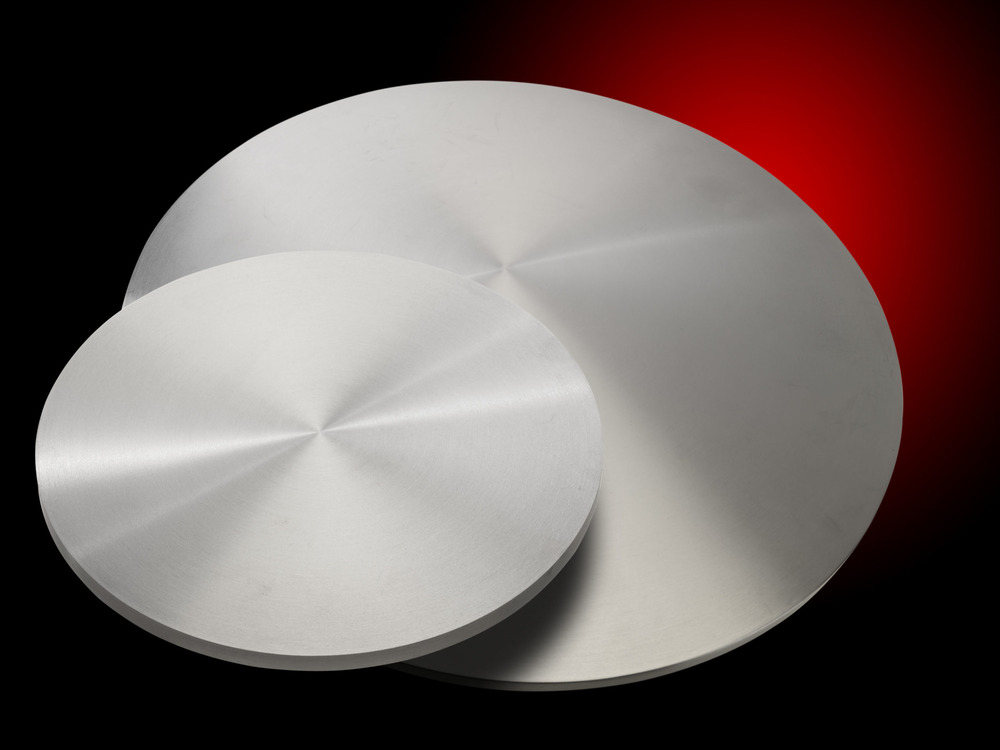
Customization of the sputtering targets is essential for optimizing the film depositions. Choosing a sputtering target’s appropriate size, shape, and composition enhances manufacturers’ coating performance. Moreover, it allows for an exact degree of adjustment to film thickness, composition, and microstructure based on an application. This article discusses the challenges in customization, the impact of target properties on film quality, and the trends in the future.
Effects of Target’s Properties on Thin Film Quality
The table below represents the impact of the target’s composition, purity, and microstructure on the quality of the thin film.
| Aspects | Description |
| Composition | The target’s composition determines the thin film’s composition, affecting its conductivity and hardness. |
| Purity | The target purity is vital to achieve a high-quality film. |
| Microstructure | The target’s microstructure affects the thin film’s microstructure and mechanical and optical properties. |
Thus, customization of the sputtering target according to the application requirements is of prime importance for good-quality film deposition. Although such properties are crucial, this customization process has faced some challenges the manufacturers have had to overcome.
Challenges Due to Customization of Sputtering Targets
Customization poses several challenges. For manufacturers who want to optimize the target performance, it must suit the chosen specific deposition process well. Here are a few challenges that one must be aware of.
- Material Compatibility: The selected manufacturing technique has plenty of pros and cons. Prepare the compound using melting and casting, sintering, or powder metallurgy. Further, it is accompanied by specific complications concerning target integrity and purity. For example, sintering should be made under prudent conditions to prevent porosity from weakening the target. It may also make high-purity materials prepared for some critical applications more challenging.
- Size and Geometry Restraints: Many custom targets need to be specially sized and geometrically designed to fit into targeted sputtering systems exactly. It is a problem when it is large or complex. Uniformity and homogeneity are also crucial in ensuring uniform depositions for custom designs. Further straining manufacturing capability, however.
- Manufacturing Techniques: The selected manufacturing technique has plenty of pros and cons. The compound can be made using melting and casting, sintering, or powder metallurgy, accompanied by specific complications concerning target integrity and purity. For example, sintering should be made under cautious conditions to prevent porosity weakening the target. It may also make high-purity materials prepared for some critical applications more challenging.
- Quality Control: Quality production with customized sputtering targets is not easy, as the material’s features are delicate and vital for this product. So, quality assurance should be enhanced and stringent from manufacturing to the final finished product. Advanced impurity tests, microstructure examinations, and physical property determinations would also be included. Moreover, the complexity is amplified because there can be any variability since it has been customized; therefore, unique quality assurance protocols are required.
- Cost implication: The manufacturing process is usually steeper, especially when using advanced materials. The more extended the process, the more the cost involved in quality control will be. Materials could also be expensive. Hence, one must maintain adequate budget control with the client and explain the price systems.
- End-use Specifications: Many applications also require unique properties- from melting points to target geometry and bond type. For instance, the electrical conductivity and thermal behavior could influence how such a target works in sputtering environments. Ensuring that specifications meet all the diverse end-use requirements complicates the design and manufacturing processes. Often, these parameters require exact adjustments to the formulation or structure of the target itself.
Technological Limitations of Customization
Mass customization of sputtering targets can only be done appropriately if technological advancement occurs. Their manufacturers must continually invest in new technologies to keep up with market demands and innovation concerning the techniques used in sputtering. However, the latest technologies present a problem in ensuring that consistency and reliability are kept intact while manufacturing these specialized targets.
This problem requires strategic planning and an eye on future trends to shape the landscape for customization.
Future Trends and Adaptation
In this regard, the following industry developments would undoubtedly demand more specialized sputtering targets. Producers must evolve according to these changing needs and continuously enhance their practices and technology to achieve desired outcomes. Long-term prosperity in custom-made sputtering targets would depend on staying ahead of all such trends, including an ever-strengthening focus on sustainability and effectiveness in production.
Conclusion
In summary, though sputtering targets have to be customized for various application purposes, manufacturers still find it challenging at the production stage. Even when proper material selection is implemented, with quality control subjected, this complexity will remain the same. This is an example of further emphasis on the need for expertise in detailing the specific requirements of different industries depending on the sputtering technology. Call us today and let our experts customize your product.









Related Posts
What is Sputtering? Understanding the Process and Applications
Grain Size and Morphology: Exploring Their Impact on Material
Superconducting Insulating Materials & Polymer Insulation