
Introduction
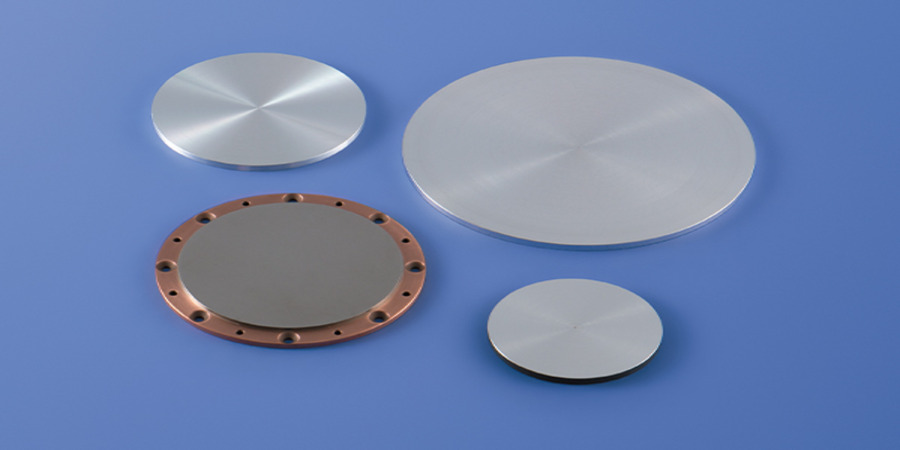
Sputter target quality plays a vital role in achieving optimal coating results, as it directly impacts the performance of the deposition process. Factors including purity, density, porosity, grain size, and shape determine the performance of the target. A high-quality target offers good film adhesion, uniformity, and consistency in coating layers. This article delves into the specific characteristics of the sputter targets that will affect the thin film coating’s quality, durability, and effectiveness.
Effect of Target Purity on the Coating Process
Purity is a significant factor in determining the quality of the coating because impurities may cause severe problems during the sputtering process.
Three primary types of impurities may impact the coating process: solid impurities, oxygen, and water vapor. These contaminants in the vacuum chamber may inhibit proper adhesion to the substrate surface. As a result, the coating does not bond with the substrate and could peel off. Thus, using high-purity sputter targets is very important to avoid such problems.
For instance, a small percentage of sulfur is added to copper targets to get the desired grain size. Sulfur content above 18 ppm leads to micro-cracks in the target, and electrical discharge occurs. Similarly, due to impurities, there is a chance for cracks and discharges in Si-Al targets. Thus, using sputter targets with maximum purity ensures optimal coating performance.
Effect of Density On Coating Quality
The target material’s density significantly affects the electrical and optical properties of the thin films. High-density targets are crucial for their ability to endure the temperatures and pressures in the vacuum chamber. Usually, targets prepared by casting should have a relative density of over 98%, while powder metallurgy targets should be more than 97%. Generally, the relative density should be more than 90%.
Low-density targets have a loose and porous structure. This structure introduces high oxygen content and impurities that compromise the coating-making process. Cracks and discharge can also occur more often. Hence, to avoid these issues, high-density materials should be used.
Effect of Grain Size, Shape, and Uniformity On Coating
The table below presents the effect of grain size, shape, and uniformity of the target on the coating process:
| Parameter | Description |
| Grain size | A target may have grains ranging from microns to millimeters. A finer-grain target usually exhibits a greater rate of sputtering. This is because targets with finer grains have more susceptible grain boundaries. Thus, during sputtering, they are more vulnerable to being struck by the ions, making it easier for them to erode and transfer onto the substrate. |
| Shape | It hugely influences the density, stability, and material utilization of sputtering. |
| Uniformity | Non-uniform targets negatively impact the sputtering rate and film quality. Uniform targets guarantee a smoother and more reliable coating. |
Techniques to Control the Parameters During Manufacturing
The table below presents the techniques that help to control the parameters discussed above:
| Technique | Description |
| Vacuum Hot Pressing | It contributes to the development of 91%–96% high-density targets. The samples are cast under the specified conditions after being put into a hot mold. The material then goes through cooling, hardening, and melting phases. |
| Hot Isostatic Pressing (HIP) | It enhances the target’s density at relatively low temperatures. For example, the ITO solid solution powder is reduced in a controlled atmosphere and temperature (300oC-5000C). |
| Cold Isostatic Pressing (CIP) | It is used to make ceramic targets with densities of roughly 95%. In this method, a liquid medium applies high pressure uniformly in all directions while the ceramic powder is packed into the mold. |
Conclusion
In summary, optimum sputtering performance and high-quality coatings depend on choosing the right target. The parameters that affect the adhesion of the layer are purity, density, grain size, shape, and uniformity. While the correct particle size and shape boost the sputtering rate, a high-purity, high-density target prevents faults such as bad adhesion. Vacuum hot pressing, HIP, and CIP are advanced production procedures that help regulate these variables to produce reliable, long-lasting targets. In several areas, the quality and performance of coatings are enhanced by selecting appropriate sputter targets based on these attributes.









Related Posts
What is Sputtering? Understanding the Process and Applications
Grain Size and Morphology: Exploring Their Impact on Material
Superconducting Insulating Materials & Polymer Insulation